Recovering from narcissistic abuse is a challenging journey of self-rediscovery. While traditional healing methods are valuable, the power of creativity and play in the healing process is often overlooked. This post explores how embracing our creative side can be a transformative tool in reclaiming our identity and joy after narcissistic abuse.
Feeling Lost After Narcissistic Abuse: Who Am I?
After twenty years of an emotionally abusive marriage, I had lost sight of who I was, what I loved, what lit me up, and why I even mattered.
My self-esteem had been whittled away by my ex’s constant criticisms, belittling, and neglect. I had become a mere shell of my former self. I was drained, depleted, exhausted—and lost.
(There’s a reason narcissistic abuse is considered to be “death by a thousand cuts.”)
Like many survivors, I felt unworthy, unlovable, hopelessly flawed, and full of self-doubt. I was consumed by shame and self-blame. Years of self-sacrificing, self-silencing, and playing small to keep the peace had left me broken.
When my ex-husband left for the fourth time (after three successful “Hoover” maneuvers), I knew I had to rediscover who I was. I turned to the usual healing modalities: therapy, journaling, exercise, support from loved ones, and books on healing. All of these helped, but something was missing.
I had yet to discover the healing power of creativity, self-expression, and play.
My Journey of Self-Rediscovery
I was an avid scrapbooker during those years. But, like everything else, even that was about others, not myself. My three sons have beautiful albums, but nothing celebrated me.
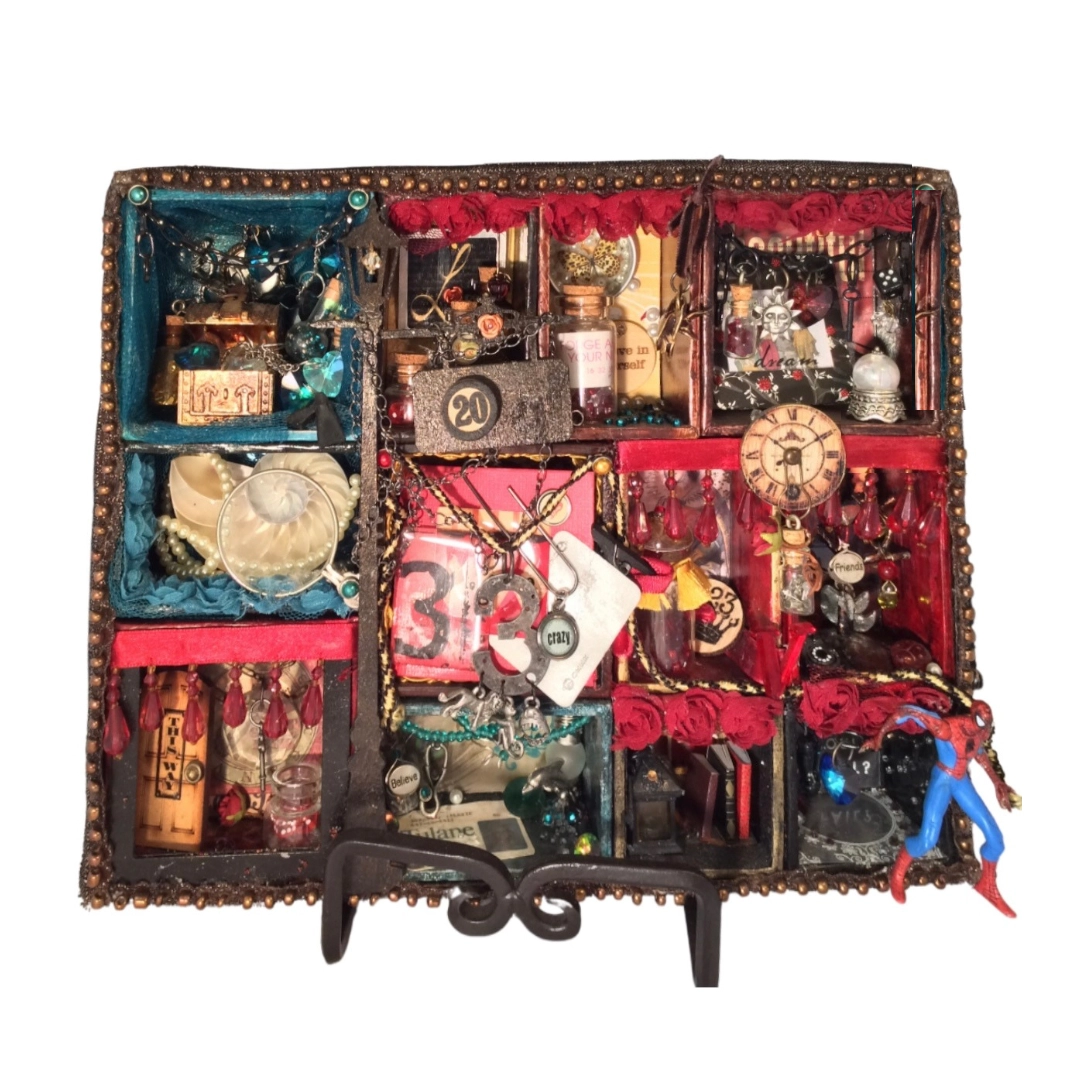
One day, I stumbled upon a ready-to-be-embellished curio box at my local art store.
Hmmm… this could be something fun to play with, I thought.
Play? Play?
Play was a novel and long-forgotten concept, but why not give it a go? I was at rock bottom already, and as my Aunt Bernice says, “The only way from here is up.”
The Therapeutic Curio Box
I began collecting tiny objects that symbolized aspects of my life that I wanted to rediscover, reinforce, and reclaim—the things that made me me.
Just gathering these items was therapeutic. It was finally all about me!
My curio box became a visual journal, a means of self-exploration and self-expression. It was something for and about me—something the narcissist could never take away.
The Role of Creativity and Play in Healing
Why do creativity and play work so well for healing?
• Self-discovery and self-expression: Creativity aids in expressing emotions that are hard to verbalize.
• Mindfulness: Engaging the senses keeps us present, reducing rumination about the past.
• Increased self-awareness: Creative expression provides new insights into our emotions and experiences.
• Storytelling and connection: Sharing art fosters community and reduces feelings of isolation.
• Fun and joy: Play reconnects us with our inner child and unfiltered happiness.
• Neuroplasticity: Artistic endeavors build new neural pathways, improving resilience.
A Doctor’s Prescription for Play
So get going!
Make art, make music, dance, cook, write, garden, or take an improv class. Try something new—or rediscover something you used to love but left behind.
Pull out an unembellished curio box, buy yourself a watercolor set, or dust off that old guitar.
The bottom line is—creativity cures, humor heals, and play is the way.
Play away! (Doctor’s orders.)


